C Programming
 3 min read
Functions, scope and storage
Each call gets a stack frame for its parameters and local variables, and C passes every argument by value, as a copy. static inside a function keeps a variable alive between calls; static at file scope hides a name from other files, and extern declares one defined elsewhere.
Calls and the stack
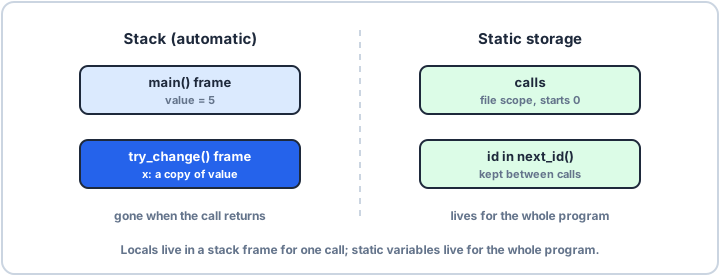
When a function is called, it gets a stack frame: room for its parameters, its local variables and the return address. The frame disappears when the function returns, so a local variable lives only for one call. Arguments are copied into the frame: changing a parameter inside a function changes the copy, never the caller's variable. To let a function change the caller's data, pass a pointer to it.
#include <stdio.h>static int calls; /* file scope, private to this file, starts at 0 */static int next_id(void) { static int id = 100; /* set once, kept between calls */ calls++; return id++;}static void try_change(int x) { x = 99; /* changes the copy only */ printf("inside: x = %d\n", x);}int main(void) { int value = 5; /* automatic: lives in main's stack frame */ try_change(value); printf("value = %d\n", value); printf("id %d\n", next_id()); printf("id %d\n", next_id()); printf("calls = %d\n", calls); return 0;}inside: x = 99 value = 5 id 100 id 101 calls = 2
static and extern
static means two things. Inside a function, a static variable is created once, before the program starts, and keeps its value between calls: id above continues from 100. At file scope, static limits a name to its own .c file, which keeps module internals private and avoids name clashes when files are linked. extern int count; declares a variable that another file defines; it reserves no storage.