C++ programming
 2 min read
if/else and switch
if/else chooses between paths using a condition, and switch jumps to the case that matches a value. Firmware often combines them into a state machine: one switch on the current state, run on every pass of the main loop.
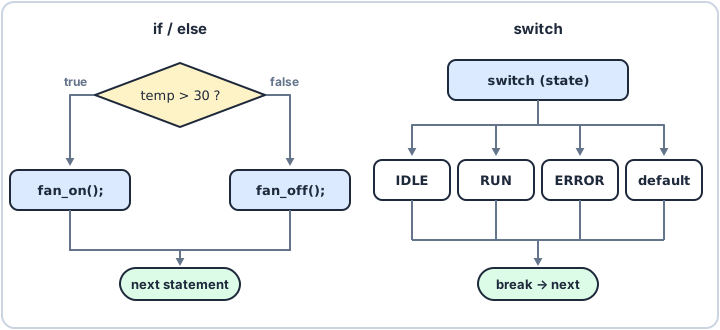
if / else
fan.cppC++
#include <iostream>int main() { int temp = 34; if (temp > 30) { std::cout << "fan on\n"; } else { std::cout << "fan off\n"; }}Output
fan on
A switch-based state machine
A state machine remembers which mode the device is in. On each pass, a switch runs the code for the current state and decides the next one. That keeps complicated behaviour in small, testable steps.
state.cppC++
#include <iostream>enum class State { Idle, Run, Error };State step(State s, bool button, bool fault) { switch (s) { case State::Idle: return button ? State::Run : State::Idle; case State::Run: return fault ? State::Error : State::Run; case State::Error: return State::Error; // stays here until reset } return s;}int main() { State s = State::Idle; s = step(s, true, false); // button pressed s = step(s, false, true); // fault detected std::cout << (s == State::Error ? "Error" : "OK") << '\n';}Output
Error