Topic
Digital Systems
How numbers and logic become hardware, one bit at a time. Twelve short insights, each with one diagram.
Start with Binary, hex and decimalInsights
-
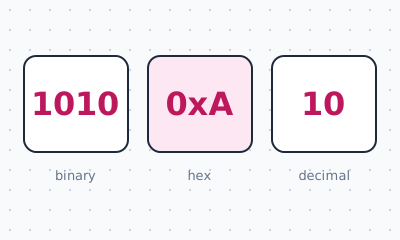
Binary, hex and decimal
Why one value has three names, and how to switch between them.
-
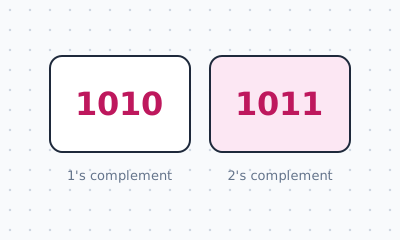
1's and 2's complement
How a fixed number of bits stores negative numbers.
-
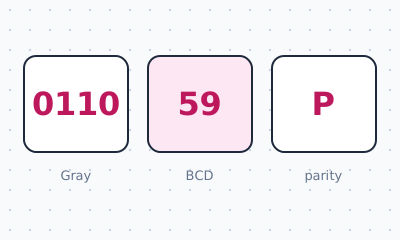
Gray code, BCD and parity
Three ways to code a number so hardware can use it safely.
-
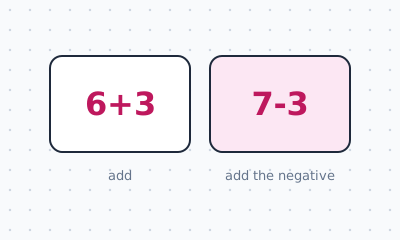
Binary addition and subtraction
Carry, overflow, and why subtracting is adding a negative.
-
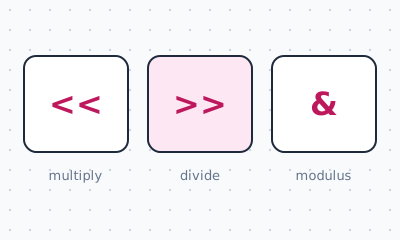
Multiply, divide and modulus
Shifts and masks: the cheap way to scale by powers of two.
-
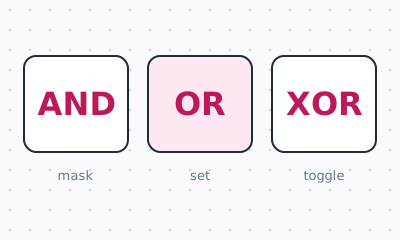
Logic gates
AND, OR, NOT, XOR and friends: the circuits behind every bit operator.
-
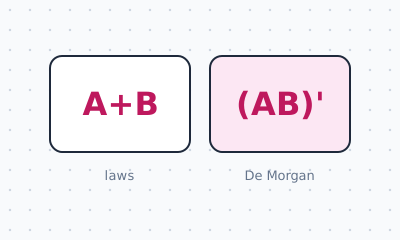
Boolean algebra
The few laws that simplify logic, and De Morgan's rule for conditions.
-
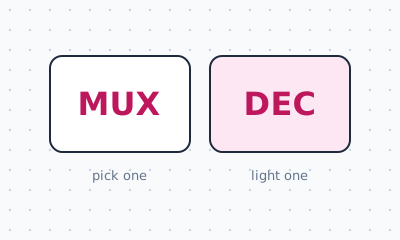
Multiplexers and decoders
Pick one of many, or switch on one of many, with select lines.
-
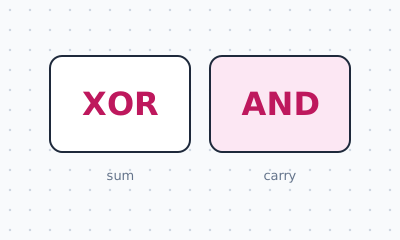
Half and full adders
Two gates add one bit; chain them and you have an ALU's adder.
-
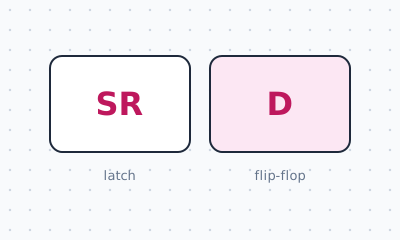
Latches and flip-flops
How gates remember one bit, and why the clock edge matters.
-
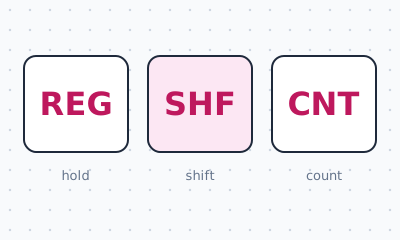
Registers and counters
Flip-flops in a row hold a byte, shift it, or count with it.
-
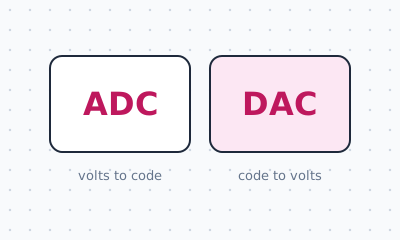
ADC and DAC
Where digital meets the analog world: samples in, voltages out.